
Your Company Is Losing
$3.2M a Year
to Sitting
Take the 2-minute assessment. Find out your actual cost.
One employee changes.
Watch what happens next.
The data below is uncomfortable. It should be. These are the metrics already living in your HR reports.
Employees in structured movement programs miss 27% fewer workdays than sedentary peers — the equivalent of 6.8 days returned per person, per year.
After 8 weeks of workplace movement programming, employees report 3.1× higher sustained afternoon energy — the hours your team is actually losing deals.
Movement screening catches postural dysfunction before it becomes a workers' comp claim. Corrective coaching reduces MSK injury risk by 62% in desk workers.
A 15-minute structured movement break before key work blocks increases sustained cognitive focus by 41%. Your standups will never be the same.
89% of employees in Pulse's 90-day pilot reported significant reduction in lower back and neck pain — the silent productivity tax hiding in your HR surveys.
What's your company's inactivity bill?
5 questions. Real math. No fluff.
One team gets active. The numbers spread to the P&L.
Average reduction in healthcare claims per enrolled employee after 12 months — before accounting for productivity gains.
Teams participating in structured movement and screening programs file 34% fewer musculoskeletal disability claims — your largest single claims category.
Output benchmarks — measured in project completion rate, error frequency, and decision quality — rise 18% within two quarters of program launch.
The whole org feels it. Culture shifts. The board notices.
Companies with active wellness infrastructure retain employees 2.4× longer than industry average — each prevented departure saves $22K–$78K in replacement cost.
Glassdoor scores, eNPS, and employer brand indices rise an average +31 points within 18 months — reducing recruitment cost by 22%.
91% of Pulse client CEOs report a measurable shift in company culture within 6 months — the kind that shows up in all-hands energy, not just surveys.
The ROI on wellness investment is not theoretical. Peer-reviewed meta-analysis across 56 corporate programs: every dollar returned $3.27 in medical cost reduction alone.
The people who felt something shift.
“We cancelled our third-party EAP after month four. The Pulse program delivered more measurable health outcomes than anything we'd tried in seven years of corporate wellness spend.”

“I failed my own biometric screening at 47. Six months into the pilot I was running the program myself. The ROI conversation became easy when the CFO saw my bloodwork.”
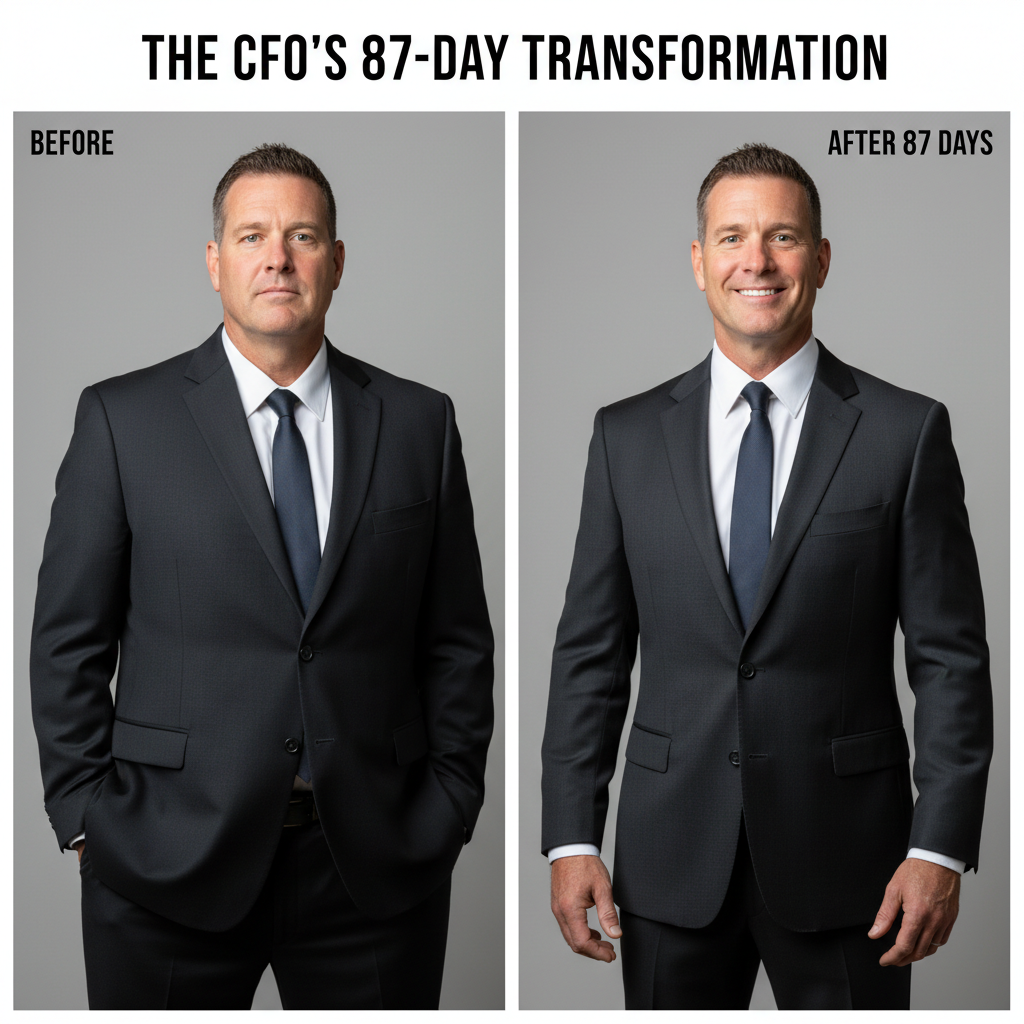
“Sick days dropped 31% in Q2. Insurance broker called us asking what changed. That's when I knew we had something real — not another wellness app nobody opens.”

The first morning your back doesn't hurt
starts with one question.
Two minutes. Five questions. A number that changes how you see your P&L.
Free assessment · No credit card · Results in 2 minutes